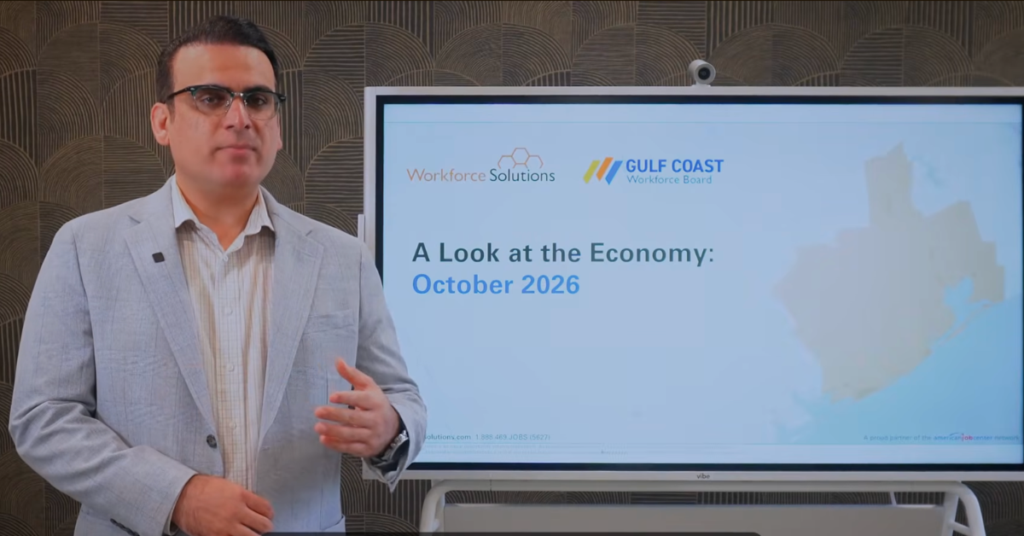
Texas continues to experience rapid economic growth, creating thousands of new jobs across industries, including construction, healthcare, transportation, manufacturing, and infrastructure. As major projects move forward throughout the Gulf Coast region, employers are facing a common challenge: finding enough skilled workers to meet demand.
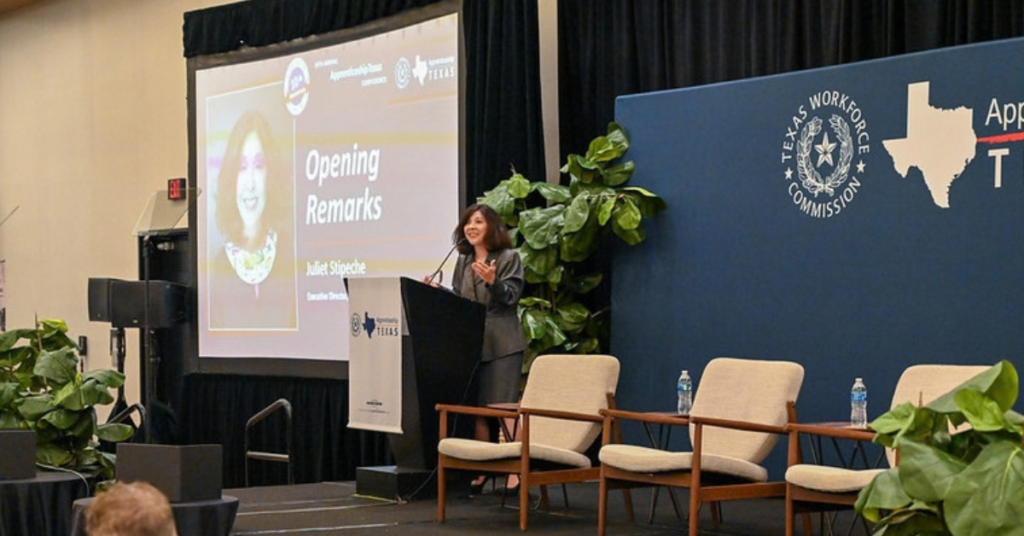
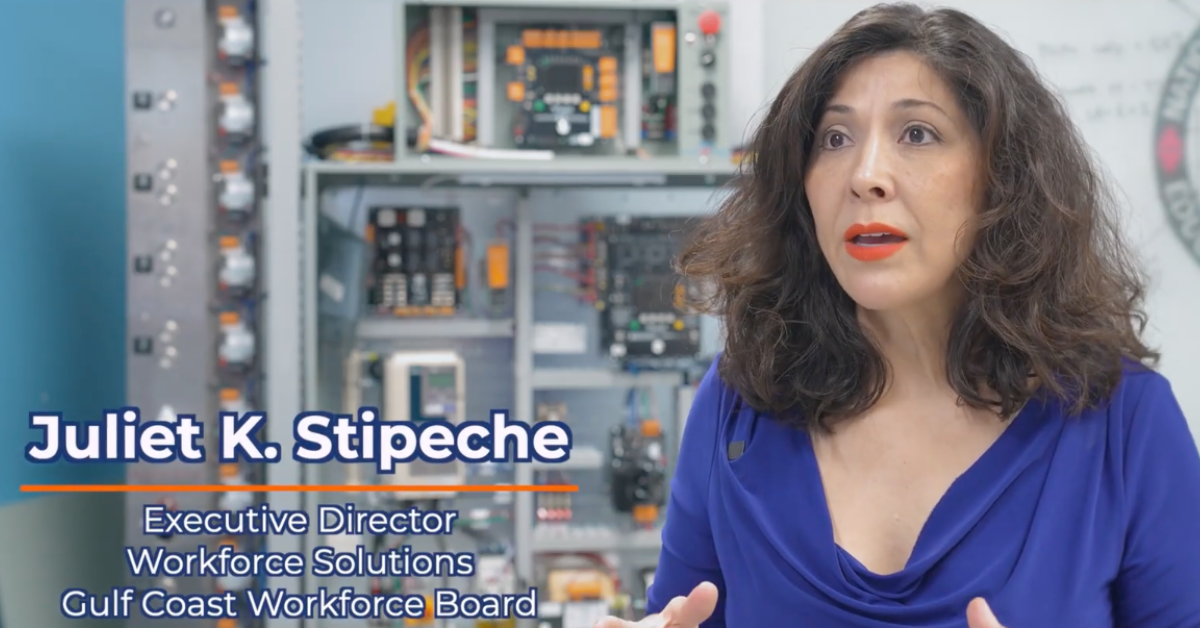
According to Workforce Solutions Gulf Coast Executive Director Juliet Stipeche, the region’s growth is creating demand across nearly every sector.
“You are looking at a very dynamic area with transportation projects, hospitals, bridges, boats,” Stipeche said.
Industry leaders agree the need for skilled workers has reached a critical point.
“Just here in the Gulf Coast region, we’ve probably got $55 billion worth of work coming here in the next year or two,” said Dale Sanford, Training Coordinator for the Gulf Coast Built-Rite Partnership.
That demand has prompted state leaders, workforce organizations, labor partners, and employers to strengthen apprenticeship and workforce training efforts. Governor Greg Abbott has directed state agencies to expand apprenticeship programs and career and technical education opportunities to help prepare Texans for high-demand careers.
Preparing the Workforce Employers Need
For employers, the shortage of skilled labor isn’t a future concern—it’s happening now.
“And so if you don’t have skilled talent, it will delay a project, cause a project to go to another place, and will not allow the local economy to succeed at the level that one would hope,” Stipeche said.
Apprenticeship programs have become a key solution because they combine classroom instruction with paid, hands-on training that prepares participants for long-term careers.
“We have to have these apprenticeship programs that provide on-the-job classroom training combined,” said Paul Puente, Executive Secretary of the Houston Gulf Coast Building and Construction Trades Council.
Programs like the Apprenticeship Readiness Program (ARP/MC3) introduce participants to multiple construction trades while helping them build essential workplace skills, earn industry-recognized certifications, and prepare for apprenticeship entrance requirements.
Rather than training workers for a single occupation, participants explore a wide range of career options before choosing the path that best matches their interests and abilities.
Apprenticeship Programs Prepare Texans for High-Demand Careers
Workforce Solutions Gulf Coast partners with industry, labor organizations, and community leaders to connect local residents with career pathways that lead to stable employment and long-term economic mobility.
“And so programs like ARPMC3 are community-driven, looking for local talent—for people that live in this region—to be able to have an opportunity,” Stipeche said.
The program also helps participants strengthen one of the biggest barriers to entering many apprenticeship programs: math proficiency.
“We go through a week of math because several of the apprenticeship programs have an aptitude test,” Sanford explained. “Our students, after going through a week of our math, have about a 98% pass rate on those same aptitude tests.”
For participant Melanie Reyes, the program introduced opportunities she didn’t know existed.
“I was actually going to Workforce Solutions looking for a job, and they recommended this to me,” Reyes said. “It sparked my interest, so I decided to apply.”
The training also helped rebuild skills she hadn’t used in years.
“I learned a lot about math,” she said. “I’ve been out of school for a little bit.”
Supporting Veterans Through Skilled Trades
The initiative also creates career pathways for veterans transitioning into civilian life.
Programs such as Veterans in Piping (VIP) allow service members to begin technical training while still on active duty, helping them transition directly into registered apprenticeships after leaving the military.
“As a veteran coming in and transitioning out of the military, I decided to choose the VIP program because it offered a great foundation and a transition into the trades,” said Joseph Karcher, Assistant Training Director for Pipe Fitters Local 211.
Veterans who complete the program can often enter apprenticeship programs with advanced standing, accelerating their path toward a skilled career.
“The VIP program is a great opportunity if you can get into it,” Karcher said. “But if not, there’s the MC3 program to help you find a path into the trade.”
Building Careers That Last
For many participants, these programs provide more than technical training—they offer a pathway to financial stability and long-term career growth.
Graduates begin careers with opportunities to advance from apprentice to journeyperson, foreman, supervisor, and even business owner.
“This is truly a way for them to access an opportunity that will build the American middle class,” Stipeche said.
Several recent graduates accepted job offers before completing the program, demonstrating the strong demand for skilled workers throughout the Gulf Coast region.
Workforce Solutions Gulf Coast continues to work alongside employers, education providers, labor organizations, and community partners to ensure Texans have access to the training, resources, and career pathways needed to meet the workforce demands of today and the opportunities of tomorrow.
Explore in-demand careers and connect with top employers at upcoming Workforce Solutions hiring events. Register today to secure your spot and access career-building resources.