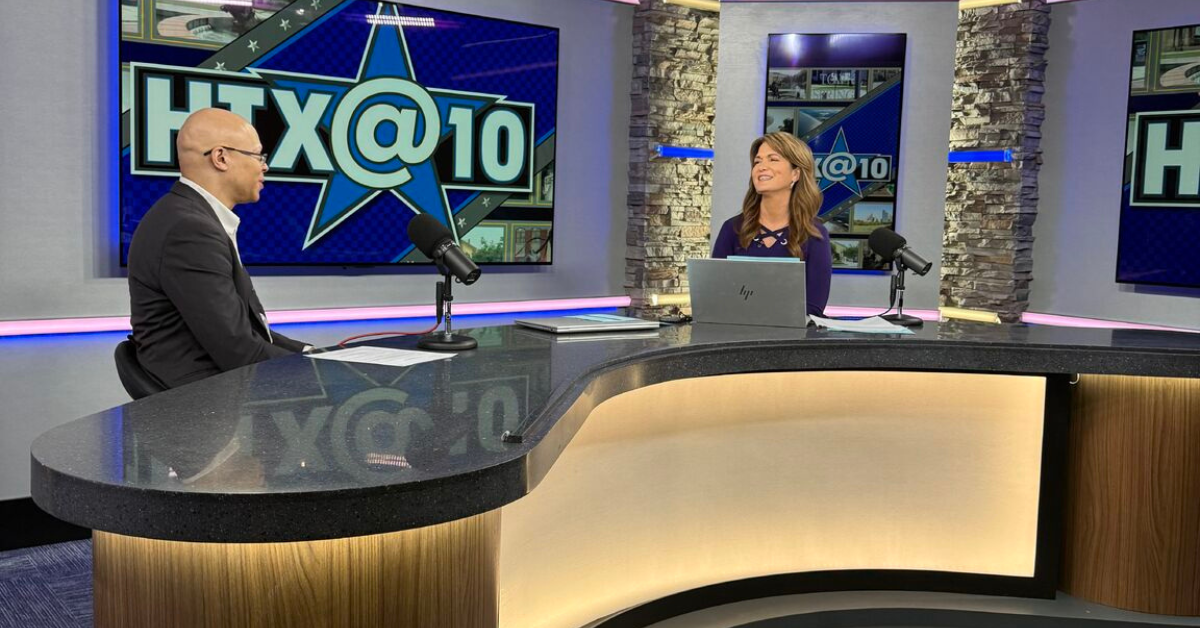
This morning on Fox 26 KRIV, Parker Harvey, Principal Economist for the Gulf Coast Workforce Board, broke down what the latest labor market data signals for job seekers and employers across the Houston region.
The takeaway is clear: the regional economy remains stable, competitive, and full of opportunity, particularly for workers who are prepared for where growth is happening next.
A Stable Labor Market with Broad-Based Growth
As of the first quarter of 2026, unemployment across the 13-county Gulf Coast region stands at 4.2%. That figure reflects a steady labor market supporting more than 3.5 million jobs across one of the most diverse regional economies in the country.
Recent job gains have been concentrated in:
- Trade, Transportation & Utilities
- Government
- Manufacturing
For job seekers, this means opportunities exist across logistics, public service, supply chain operations, skilled trades, and advanced production roles. These sectors offer entry-level pathways as well as mid- and high-skill careers with advancement potential.
A $670 Billion Economy Creating Demand Across Industries
Houston’s regional economy generates approximately $670 billion in GDP, driven by long-established strengths in energy alongside growing sectors such as aerospace, biotechnology, logistics, and technology.
Major employers including Apple, Amazon Web Services, Nvidia, and Google are contributing to increased demand in:
- Artificial intelligence
- Cybersecurity
- Healthcare
- Management and professional occupations
For workers, this signals a continued shift toward skills in data, digital systems, cloud computing, advanced manufacturing technologies, and healthcare delivery.
The Fastest-Growing Careers Through 2032
Looking ahead, labor market projections show two of the fastest-growing occupations in the region are:
- Nurse Practitioners
- Data Scientists
Both roles are projected to grow by more than 40% by 2032.
This projected growth reflects long-term structural trends, an aging population requiring expanded healthcare services, and businesses across every industry relying more heavily on data-driven decision-making.
For students, career changers, and upskilling workers, these projections offer a clear signal: advanced healthcare credentials and data analytics skills are positioned for strong demand over the next decade.
What This Means for Job Seekers Today
A 4.2% unemployment rate signals competition for talent in key sectors. Employers are hiring, but increasingly for roles that require specialized skills, certifications, or postsecondary education.
That’s why aligning training with real labor market data matters.
Workforce Solutions and the Gulf Coast Workforce Board serve the 13-county region with a focus on data-driven strategy, employer engagement, and targeted education and training investments. By tracking industry growth and occupational projections, we help ensure that residents are prepared for high-growth, high-opportunity careers, and that employers have access to the talent they need to compete.
We appreciate the opportunity to share these insights with the community through Fox 26 KRIV and look forward to continuing to support the region’s workforce as we move through 2026 and beyond.
Explore in-demand careers and connect with top employers at upcoming Workforce Solutions hiring events. Register today to secure your spot and access career-building resources.